 Skip to main content

Please select the hazard topic below to view the recommended response.
An active threat is any situation presenting immediate danger. Trust your instincts. Your safety is the priority.
IMMEDIATE ACTIONS
- Stay calm.
- Assess the situation if safe.
- If there is an immediate threat to life or safety, call 911 immediately (when safe to do so).
- Provide clear, direct information (see below).
- Follow RUN-HIDE-FIGHT principles based on what is safest in the moment.
- After calling 911 (if needed) and when safe, notify the Campus President or designee.
WHAT TO REPORT TO 911
Give as much detail as possible
- Identity of individual (if known).
- Description of person(s).
- Exact location (building/room).
- Shots fired?
- What led to the incident.
- Number of people involved.
- Number/type of weapon(s).
- Any relevant background information.
IF A WEAPON IS SURRENDERED OR FOUND
- Do not handle unless necessary for immediate safety.
- Place weapon in an empty container and secure the area until law enforcement arrives.
WHEN LAW ENFORCEMENT ARRIVES
- Follow their instructions.
- Keep hands visible and empty.
- Evacuate to the Emergency Assembly Area when directed.
- Account for students, employees, and visitors when safe to do so. Report missing persons to emergency responders immediately.
- Do not leave the area until released by authorities.
RUN-HIDE-FIGHT
Run
- Run from danger when safe.
- Leave belongings.
- Use non-traditional exits if needed.
- Move to Emergency Assembly Area when possible.
- Help others if it is safe to do so.
Hide
- If you cannot get out safely, HIDE.
- Lock or barricade doors/entrances.
- Stay out of the active threat’s view.
- Turn off lights, silence phones, close blinds, and be quiet.
- Take attendance (note anyone missing).
- Provide real-time updates to others and authorities when safe.
- Stay hidden until ALL CLEAR is issued by emergency personnel or IECC Alerts.
Fight
- Distract, disrupt, move, make noise, throw objects.
- Try to disable the threat.
- Use only to create an opportunity to escape.
- Fight like your life depends on it.
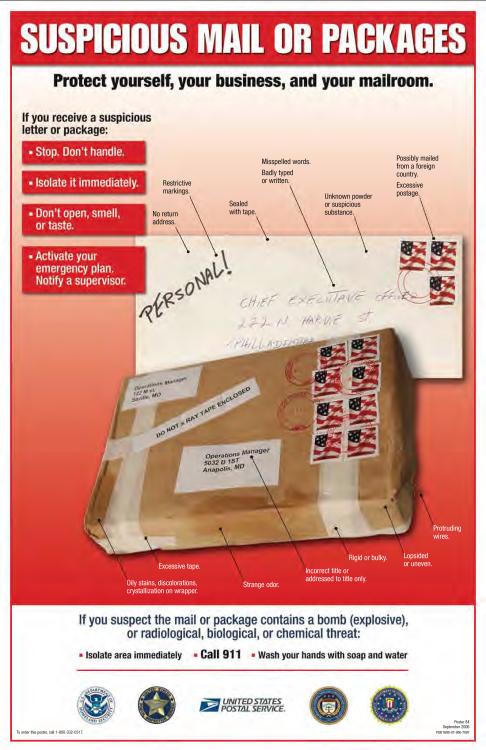
A bomb threat is any threat – real or implied – to detonate an explosive or incendiary device that could cause harm to people or property.
IF A BOMB THREAT IS RECEIVED
By Phone:
- Remain calm and take the caller seriously.
- Do not hang up – listen carefully and try to keep the caller talking.
- Use the Bomb Threat Checklist to ask questions and document details.
- If possible, signal someone else to call 911 from another landline (out of hearing range of the caller).
- Note the Caller ID number, voice characteristics, background noises, and exact wording.
- Call 911 immediately once the call ends.
- Provide the completed checklist to responding officers.
By Email:
- Call 911 immediately.
- Do not delete the message.
- Print a copy or preserve the email for law enforcement.
By Mail:
- Do NOT touch, open, move, shake, smell, or tamper with it.
- Immediately call 911 from a landline and report what you observe.
- Isolate the area and keep others away.
- Follow instructions from emergency responders.
Common Suspicious Package Indicators:
- Powdery substance, oily stains, discoloration or crystallization.
- No return address or one that cannot be verified.
- Excessive postage, heavy tape, or unusual weight/shape.
- Misspelled words, incorrect titles, or outdated addressee information.
- Restrictive markings (“Personal”, “Confidential”).
- Strange odors or stains.
- Unexpected mail from unfamiliar sources.
Evacuation & Response:
- Notify Campus President or designee.
- Do not evacuate unless directed by emergency personnel or alarms are activated.
- If instructed, activate a fire alarm and evacuate calmly to the Emergency Assembly Area.
- Do not re-enter until authorized by emergency responders or Campus President or designee.
- Assist responders as requested, including area identification or evaluation.
- Account for students, employees, and visitors when safe to do so. Report missing persons to emergency responders immediately.
BOMB THREAT CHECKLIST
Complete this checklist if you receive a bomb threat by phone. Remain calm. Do NOT hang up. Keep the caller talking if possible.
Call Details:
Date: ______________________
Time Call Received: ________ Time Call Ended: _______
Phone Number Displayed (Caller ID): ________________
Your Name: ___________________________________
Your Location/Building: ________________________
Caller Information:
Caller gender: □ Male □ Female □ Unknown
Estimated Age: □ Adult □ Youth □ Unknown
Voice: □ Calm □ Angry □ Nervous □ Excited □Slow
□ Fast □ Slurred □ Loud □ Soft
Accent or speech pattern: __________________________
Background Noises: □ Traffic □ Music □ Voices
□ Machinery □ Office □ Street
□ Quiet □ Other: _____________
Questions to Ask (If Safe To Do So):
Do not challenge the caller. Ask naturally and write exact responses.
When will the bomb explode? ____________________________________
Where is the bomb located? ____________________________________
What does the bomb look like? __________________________________
What kind of bomb is it? ________________________________________
What will cause it to explode? ___________________________________
Why did you place the bomb? ___________________________________
What is your name? ___________________________________________
Caller’s Exact Words (Write verbatim if possible)
___________________________________________________________
___________________________________________________________
___________________________________________________________
___________________________________________________________
Immediate Actions After Call Ends
- Call 911 Immediately
- Notify Campus Administration
- Do not use radios or cell phones near suspected device
- Await instructions from emergency responders
- Provide this checklist to officer in charge
Do NOT:
- Do NOT evacuate unless instructed
- Do NOT touch suspicious items
- Do NOT spread unverified information
Evacuate only if it is safe to do so. When in doubt – trust your instincts. Evacuations are mandatory when fire alarms sound or when directed by authorities.
WHEN EVACUATION IS REQUIRED
Evacuate when alarms sound, directed by emergency personnel, or danger is imminent.
- Leave immediately – do not delay.
- If safe, complete equipment or lab shutdown procedures, then evacuate.
- Activate a manual fire alarm if needed and safe to do so.
- Take only essential personal items (keys, phone, purse, outerwear).
- Close doors behind you.
- Follow EXIT signs and posted evacuation routes; stay to the right in hallways and stairs.
- Do not use elevators.
- Avoid smoke; if present, stay low and crawl to an exit.
- Assist others only if it does not put you at risk.
- Proceed directly to the Emergency Assembly Area (or move to a safe location away from the building if unknown).
- Report your status and notify responders of anyone needing assistance.
- Do not resume normal operations until an ALL CLEAR is issued by emergency personnel or IECC Alerts.
AT THE EMERGENCY ASSEMBLY AREA
- Stay with your group/class/department.
- Account for students, employees, and visitors when safe to do so. Report missing persons to emergency responders immediately.
- Follow instructions from campus officials or emergency responders.
IF YOU CANNOT EVACUATE
- Proceed to a fire-rated stairwell or other safe location and close the door.
- If stairwell access is not possible, evacuate horizontally to a room away from hazards and close doors.
- Signal rescuers (sign in window, lights, phone).
- Place wet cloths under doors if smoke is present.
- Call 911, provide your location and situation, and follow instructions.
- If safe, have one person stay with the individual and one person notify emergency responders of the location and needs.
ASSISTING PERSONS WITH DISABILITIES, ACCESS, OR FUNCTIONAL NEEDS
Mobility limitations:
- Always ask how to help – the individual is the expert.
- Do not lift a wheelchair without guidance; ask for the safest method.
Visual disabilities:
- Explain the emergency and exit route.
- Offer your elbow to guide; describe surroundings and obstacles.
Hearing loss/speech impairments:
- Get attention with lights, gentle taps, or eye contact.
- Use gestures, written notes, or clear visual instructions (e.g., “FIRE – USE THIS EXIT”)
BEFORE AN EMERGENCY
- Learn primary and secondary exit routes and review evacuation maps.
- Identify hazards inside and outside the building.
- Know the designated Emergency Assembly Area for your location.
- Persons with disabilities, access, or functional needs are encouraged to self-identify and work with others in advance to determine:
- Evacuation routes and methods
- Individual emergency plans
- Know safety shutdown procedures if working with high heat, open flame, or hazardous materials.
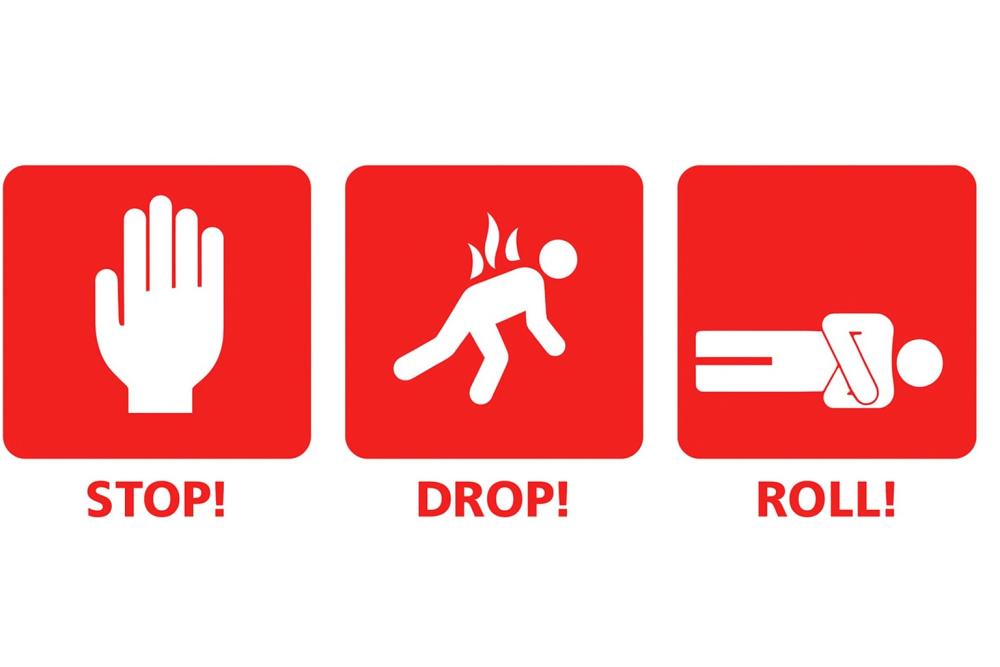
IF CLOTHING CATCHES FIRE >>>
IMMEDIATE ACTIONS
(Fire or Explosion Suspected or Confirmed)
1. CALL 911 — ALWAYS
If there is an immediate threat to life or safety, call 911 immediately (when safe to do so).
2. ACTIVATE THE FIRE ALARM
Pull the nearest alarm pull-station if it has not already sounded.
3. EVACUATE IMMEDIATELY
Leave using the nearest safe exit.
Do NOT use elevators.
Assist others if you can do so safely.
Close doors behind you to slow smoke and fire spread.
4. MOVE TO EMERGENCY ASSEMBLY AREA
Proceed to your building’s Emergency Assembly Area, or if unknown, move a safe distance away (≥500 ft whenever possible).
5. CALL CAMPUS PRESIDENT OR DESIGNEE ONLY WHEN SAFE
After calling 911 (if needed) and when safe, notify Campus President or designee.
Account for students, employees, and visitors when safe to do so. Report missing persons to emergency responders immediately.
IF AN EXPLOSION OCCURS
- Treat as a fire event plus additional precautions:
- Evacuate immediately; assist others only if safe.
- Be alert for secondary explosions or structural damage.
- If unable to evacuate, move to a protected interior space.
- Close doors, use wet cloth at base of doors if fire threat increases.
- Call 911 and signal from a window if possible.
AFTER EVACUATION
- Stay in your Emergency Assembly Area until ALL CLEAR is issued by emergency personnel or IECC Alerts.
- Do not re-enter the building until an ALL CLEAR is issued by emergency personnel or IECC Alerts.
- Account for students, employees, and visitors when safe to do so.
- Report missing persons to responding officials immediately.
IF YOU SEE SMOKE OR FIRE - R A C E
R escue: Move yourself and anyone in immediate danger if safe to do so.
A larm: Activate the building fire alarm and call 911.
C onfine: Close doors/windows to slow spread.
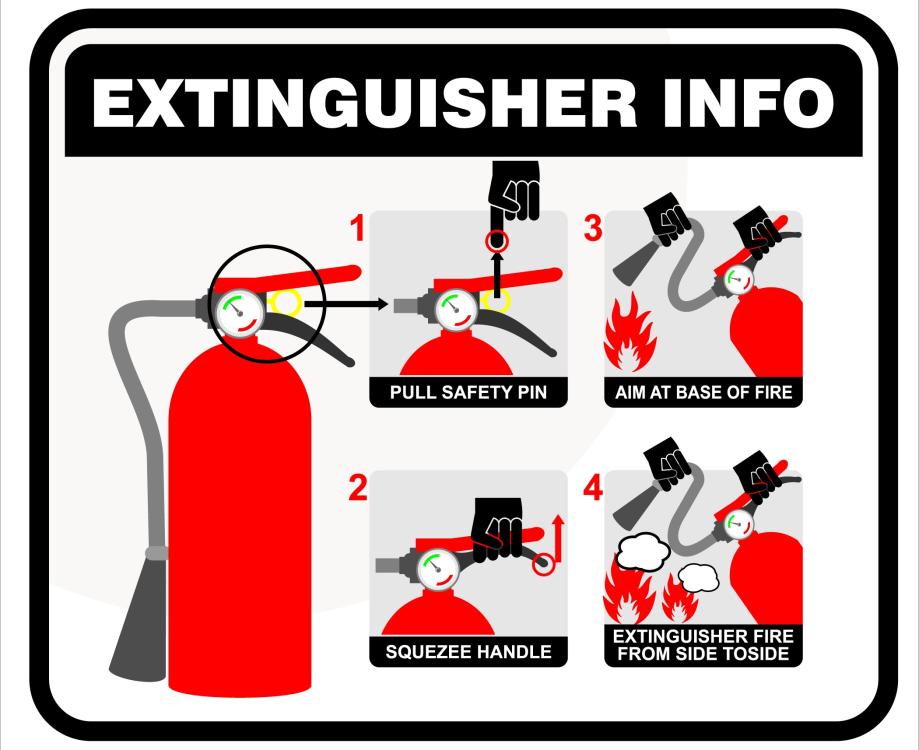
E vacuate/Extinguish: Evacuate immediately OR use an extinguisher only if trained and conditions are safe.
IF YOU CAN'T EVACUATE
Shelter in a Room
- Close doors and windows.
- Place wet cloth or clothing at the base of doors to block smoke.
- Move to a window and signal for help.
- Call 911 and report your exact location.
If Caught in Smoke
- Stay low—crawl on hands and knees.
- Breathe through a cloth or your clothing.
A hazardous material is any biological, chemical, radiological, fuel, or oil substance that poses a danger to life, health, or the environment if released without precaution.
GENERAL RESPONSE TO ANY HAZARDOUS MATERIAL INCIDENT
1. Do NOT touch, clean, or move hazardous materials.
2. Move to a safe location away from the spill/release.
3. If the spill is outdoors, move all students, employees, and visitors indoors:
- Close all doors and windows and seal the building.
- Shut down HVAC systems to draw outside air, if possible.
4. If there is an immediate threat to life or safety, call 911 immediately (when safe to do so).
5. Provide the following information:
- Name/type of material (if known)
- Estimated quantity
- Exact location
- Time of incident
- Whether injuries or exposures occurred
- Whether fire or explosion is involved
- Your name and contact information
6. Follow instructions from emergency responders.
7. Evacuate or shelter-in-place as instructed.
8. Account for students, employees, and visitors when safe to do so. Report missing persons to emergency responders immediately.
9. Do not resume normal operations until an ALL CLEAR is issued by emergency personnel or IECC Alerts.
10. After calling 911 (if needed) and when safe, notify Campus President or designee.
SPILL OR CONTAMINATION
1. Avoid spreading contamination by restricting access to the equipment/area only to individuals who are properly protected and trained to deal with the type of hazard which exists (e.g., radioactive, corrosive, flammable, biological).
2. Notify Campus President or designee. If it is an emergency, call 911 immediately.
3. Evacuate all persons from the immediate area of the spill to a nearby location.
4. Do not attempt any clean up or decontamination procedures alone or without proper personal protective equipment (PPE).
5. Attempt spill clean-up only if you feel it is safe, have the appropriate PPE, you are familiar with the properties of the spilled material, and are trained to handle spills.
6. Dispose of spill safely and appropriately. Do not attempt disposal if the proper materials or procedures are not available.
GENERAL PRINCIPLES
- If there is an immediate threat to life or safety, call 911 immediately (when safe to do so).
- Do NOT move an ill or injured person unless there is an immediate threat to life.
- Provide care only if you are trained, and only within the scope of your training.
- Use universal precautions (e.g., gloves, rescue masks) to avoid contact with blood or body fluids.
- Wash hands thoroughly immediately after providing any first aid.
- Do not handle soiled materials.
- Notify Campus President or designee.
MINOR INJURY OR ILLNESS
1. Assess the situation and provide basic first aid within your training.
2. Allow the injured person to care for themselves whenever possible.
3. Avoid direct contact with blood or body fluids.
4. If professional medical attention is needed, do not transport the individual yourself.
5. The individual may:
- Call 911, or
- Contact a friend or family member for transportation.
6. Notify Campus President or designee.
7. Complete the IECC Incident Report once the incident is fully resolved.
SEVERE ALLERGIC REACTION
Use an EpiPen if someone shows signs of a severe allergic reaction (anaphylaxis), including:
- Difficulty breathing or wheezing
- Swelling of face, lips, or throat
- Hives or widespread rash
- Dizziness, fainting, or confusion
- Rapid progression of symptoms
1. Call 911 immediately.
2. Ask if the individual has an EpiPen and where it is located or locate a Campus EpiPen
3. If trained, assist with administering the EpiPen:
- Remove safety cap
- Press firmly against outer thigh (through clothing if needed)
- Hold in place for several seconds
4. Note the time the EpiPen was administered.
5. Stay with the person until emergency responders arrive.
SERIOUS INJURY OR ILLNESS
1. Assess the situation, but do NOT move the person.
2. Call 911 immediately.
3. Provide first aid only within your training.
4. Notify Campus President or designee as soon as possible.
5. Assist emergency responders when they arrive by giving information and guiding them to the scene.
BLOOD EXPOSURE/BODY FLUID INCIDENTS
If exposed to blood or any potentially infectious material:
1. Immediately wash the exposed area with soap and water for at least 15 minutes.
- If the eyes are exposed, flush with water for 15 minutes at the nearest eyewash station.
2. Seek medical attention as soon as possible.
3. Do not attempt to clean the affected area yourself—contact campus Operations & Maintenance for proper cleanup and decontamination.
4. Notify Campus President or designee.
5. Complete the IECC Incident Report once the incident is fully resolved.
AED (AUTOMATED EXTERNAL DEFIBRILLATOR) PROCEDURES
1. Confirm the person is unresponsive.
2. Call 911 and begin CPR.
3. Retrieve an AED, or send a bystander to retrieve one.
4. Turn on the AED and follow its voice and visual prompts.
5. Have a bystander (if present):
- Notify Campus President or designee, and
- Wait at the entrance to direct emergency responders.
6. Continue CPR and AED use until EMS arrives and takes over.
Natural disasters can develop quickly and without warning. IECC’s priority is to keep students, employees, and visitors safe through clear and consistent guidance across all campuses. Always follow instructions from first responders, campus officials, and IECC Alerts. If there is an immediate threat to life or safety, call 911 immediately (when safe to do so).
TORNADO
Tornadoes are among the most dangerous weather threats in the Midwest. IECC follows a clear warning system that mirrors national weather standards.
TORNADO WATCH
Conditions are favorable for tornado formation.
What to Do
- Stay alert for changing weather.
- Keep cell phones on to receive alerts.
- Identify your nearest Tornado Shelter Area.
- Be ready to move immediately if a warning is issued.
TORNADO WARNING
A tornado has been sighted or indicated by radar.
Take Action Immediately
- Go to the nearest designated Tornado Shelter Area.
- Stay away from windows, doors, and exterior walls.
- Assume the protective position: crouch low, cover your head and neck.
- Stay inside your Tornado Shelter Area until an ALL CLEAR is issued by emergency personnel or IECC Alerts.
- Utility shutdowns may occur under the direction of campus leadership.
AFTER A TORNADO
- Check for injuries, but do not move seriously injured individuals unless they are in immediate danger.
- Use extreme caution when exiting the building—watch for debris, broken glass, gas smells, and downed power lines.
- Only reenter buildings when local officials say it is safe.
- Account for students, employees, and visitors when safe to do so.
- Follow any instructions from IECC Alerts regarding dismissal, sheltering, or campus closure.
SEVERE THUNDERSTORMS
- Monitor weather information through NOAA Weather Radio, local news, or your phone’s weather alerts.
- Stay indoors and away from windows.
- Prepare to move to a Tornado Shelter Area if conditions worsen.
EARTHQUAKES
While less common in our region, earthquakes can occur with no warning.
During the Shaking: DROP, COVER, HOLD ON
- DROP to the ground immediately.
- COVER under a sturdy table or against an interior wall; protect your head and neck.
- HOLD ON until the shaking stops.
After the shaking stops
- Expect aftershocks.
- Check yourself and others for injuries.
- Evacuate only if the building is damaged, unsafe, or if instructed by officials.
- Be alert for gas leaks, electrical hazards, and structural damage.
- Limit phone use to emergencies—networks may be overloaded.
- Await instructions from emergency personnel or IECC Alerts.
FLOODING
Flooding can occur from heavy rain, drainage issues, or water main failures. Flash flooding can develop very quickly.
What to Do
- Move away from affected areas, especially if electrical outlets or equipment are exposed.
- Do not walk through moving water.
- Do not drive through moving water.
- Report hazards to Campus President or designee once safe.
- After calling 911 (if needed) and when safe, notify Campus President or designee.
NOAA WEATHER RADIO
Listen to NOAA Weather Radio-All Hazards for the latest weather forecasts 24 hours a day, including watches, warnings and advisories.
162.450 Newton 017191
162.475 Salem 017191
162.550 Evansville 017185
PERSON IN DISTRESS
A “person in distress” may be anyone showing signs of emotional, behavioral, or physical crisis. This may include anxiety, confusion, agitation, withdrawal, extreme mood swings, or disruptive behavior.
Your role is not to diagnose—your role is to recognize concern and get help quickly and safely.
Immediate Steps
1. Ensure your own safety first.
2. Approach calmly; use a supportive tone.
3. Listen, avoid judgment, and avoid escalating the situation.
4. If there is an immediate threat to life or safety, call 911 immediately (when safe to do so).
5. If safe, stay with the person or designate someone you trust to stay nearby.
6. After calling 911 (if needed) and when safe, notify Campus President or designee.
7. If the situation is not life-threatening but concerning, refer the person to student services or Campus President or designee for follow-up.
MENTAL HEALTH CRISIS
A mental health crisis involves behavior that indicates someone may be a danger to themselves or others, or is unable to function safely. Examples include:
- Threats of suicide or self-harm
- Statements about wanting to die
- Hallucinations or severe disorientation
- Extreme fear or panic
- Loss of ability to care for oneself
- Uncontrolled or violent outbursts
If there is an immediate threat to life or safety, call 911 immediately (when safe to do so). Anyone may call 911.
While waiting for help (if safe):
- Stay calm; speak slowly and clearly.
- Keep a comfortable distance.
- Remove bystanders to reduce stress.
- Avoid physical contact unless absolutely necessary for immediate safety.
- Do not promise confidentiality—emergency responders must know what is happening.
- Once the person is safe, notify Campus President or designee and document what occurred.
Civil disturbances may include riots, escalating demonstrations, threatening crowds, or disruptive individuals.
When to call 911:
- The disturbance escalates into violence
- There is a threat to life or safety
- Individuals are behaving aggressively or dangerously
- Weapons are visible or suspected
If the disturbance is non-violent or in early stages:
- Do not confront or intervene.
- Move away from the disturbance.
- Secure your workspace or classroom if safe.
- Secure sensitive files/equipment
- Keep students, visitors, and employees away from the affected area.
- If the disturbance is outside, remain indoors and stay away from doors and windows.
- If the disturbance is inside the building:
- Evacuate or shelter-in-place depending on the safest option
- Follow instructions from Campus President or designee or emergency responders
Administrative Notification
- If the situation has not reached a critical point and does not pose immediate danger:
- Notify Campus President or designee. Only make this notification after your safety is assured.
Follow Official Instructions
- During a civil disturbance, the President or Emergency Response Team may:
- Notify law enforcement
- Direct building occupants to secure their areas
- Provide evacuation or shelter-in-place instructions
- Coordinate with district office and emergency responders
Monitor IECC Alerts and official campus communications.
A Shelter-in-Place Order means it is safer to stay inside a building than to evacuate. This action is used for severe weather, hazardous material releases, nearby security threats, or any situation where leaving the area could place individuals in greater danger.
Shelter-in-Place is simple: Get Inside. Stay Inside. Stay Safe.
WHEN TO SHELTER IN PLACE
A Shelter-in-Place order may be issued when:
- Severe weather threatens the area
- Hazardous materials are released outdoors
- A violent or potentially dangerous person is in the vicinity
- Law enforcement or emergency officials direct the campus to shelter
- IECC Alerts or other emergency notifications instruct you to do so
If there is an immediate threat to life or safety, call 911 immediately (when safe to do so).
TYPES OF SHELTER IN PLACE SITUATIONS
Severe Weather
- Move to the Safest Location
- Go to the lowest level of the building.
- Move to a small interior space such as a hallway, restroom, or Tornado Shelter Area.
- Stay away from windows, glass, doors, and exterior walls.
- Sit low to the ground.
- Cover your head and neck with your arms or sturdy objects.
- Remain in the sheltered area until ALL CLEAR issued by emergency personnel or IECC Alerts.
Security
- Move indoors immediately.
- Secure and barricade the room.
- Turn off lights and silence phones.
- Stay against walls, behind furniture, or out of line of sight.
- Remain completely silent unless signaling for rescue.
Hazardous Materials
- Close windows and doors.
- Stay inside an interior room.
- Keep away from ventilation openings.
- Do not leave the building unless instructed by emergency officials.
GENERAL SHELTER-IN-PLACE INSTRUCTIONS
1. Get Indoors Immediately
If you are outside when a Shelter-in-Place order is issued or when conditions rapidly worsen:
- Move to the nearest safe building.
- Alert others around you if possible.
2. Choose a Safe Interior Space
Select an area that provides the best protection:
- A Tornado Shelter Area
- A small, interior room, hallway, or space away from windows
- The lowest level of the building for severe weather
- A room that has a door that can be secured for security threats
- Avoid rooms with large windows, chemicals, machinery, or wide open spaces.
3. Secure the Space
Once inside:
- Lock or secure doors.
- Close windows and blinds.
- Turn off lights.
- Silence cell phones.
- Stay out of sight and away from doors and windows.
- If the door cannot lock, block it with heavy furniture or any available items.
4. Stay Quiet and Stay Put
- Remain calm.
- Stay quiet unless noise would help rescuers locate you.
- Remain in place until an ALL CLEAR is issued by emergency personnel or IECC Alerts.
- Do not open the door for unknown individuals.
5. Call 911 if There Is a Direct Threat
- Anyone may call 911.
- Call as soon as you are safe to do so.
- After calling 911 (if needed) and when safe, notify Campus President or Designee.
6. Help Others if It Is Safe
Assist individuals with disabilities or access needs, but do not put yourself in danger.
Utility failures can happen without warning and may impact safety, building systems, and campus operations. The first priority is always protecting life and ensuring clear communication.
If there is an immediate threat to life or safety, call 911 immediately (when safe to do so).
Then follow the guidance below.
POWER OUTAGE
A power outage may affect lighting, alarms, HVAC, elevators, and lab equipment.
What to Do Immediately
- Stay calm and remain where you are unless directed to evacuate.
- Use flashlights — do not use candles or open flames.
- Unplug sensitive electronics if safe (computers, lab devices).
- Close fume hoods if possible; if ventilation becomes unsafe, evacuate the area.
- Follow instructions issued through IECC Alerts.
If evacuation is ordered:
- Assist anyone who needs help.
- Take caution on stairs; elevators may not operate.
Campus Operations/Maintenance will coordinate with utility providers and leadership.
Do NOT
- Attempt to fix electrical systems.
- Use elevators during outages.
- Light candles or use fuel-powered devices indoors.
WATER OUTAGE
Water outages affect bathrooms, drinking water, sanitation systems, fire suppression, and cooling systems.
What to Do
- Notify Campus President or designee and Campus Operations/Maintenance.
- Conserve stored water resources if available.
- Follow instructions regarding class continuation, relocation, or dismissal.
- Avoid using sinks, toilets, and equipment requiring water.
Leadership will determine operational status and notify the campus.
GAS LEAKS, FUMES, OR VAPORS
A natural gas smell (often like sulfur/rotten eggs), hissing pipes, or unexplained dizziness could indicate a gas leak.
If You Suspect a Gas Leak
- Leave the Area immediately
- If there is an immediate threat to life or safety, call 911 immediately (when safe to do so).
Important Safety Actions
- Do NOT use cell phones, radios, or electronics near the suspected leak — sparks can ignite gas.
- Do NOT turn lights or switches on/off.
- Leave doors and windows open behind you as you exit.
- Do not move vehicles or machinery near the leak.
- Evacuate to a safe distance and assist others if it can be done safely.
- Do not re-enter until ALL CLEAR issued by emergency personnel or IECC Alerts.
Only trained personnel shut off gas systems.
BOIL ORDERS
A boil order means water is not safe to drink or use for cooking unless boiled for at least one minute.
During a Boil Order
- Use bottled water for drinking, food prep, brushing teeth.
- Do not rely on refrigerators with water/ice dispensers.
- Wash hands with soap and bottled/boiled water, or use sanitizer.
- Follow all communications from IECC Alerts and local officials.
CAMPUS CLOSURES AND COMMUNICATION
During any utility emergency, IECC leadership may:
- Issue instructions via IECC Alerts
- Coordinate with emergency responders and utility providers
- Determine whether to evacuate, relocate, or continue operations
- Issue an ALL CLEAR when safe