Skip to main content


A student working alongside an entrepreneur. A small business owner meeting with an adviser. An employer connecting with a potential employee. A community member learning a new skill.
Lincoln Trail College President Tona Ambrose sees all of those possibilities, sometimes happening at the same time, inside The 618 Project.
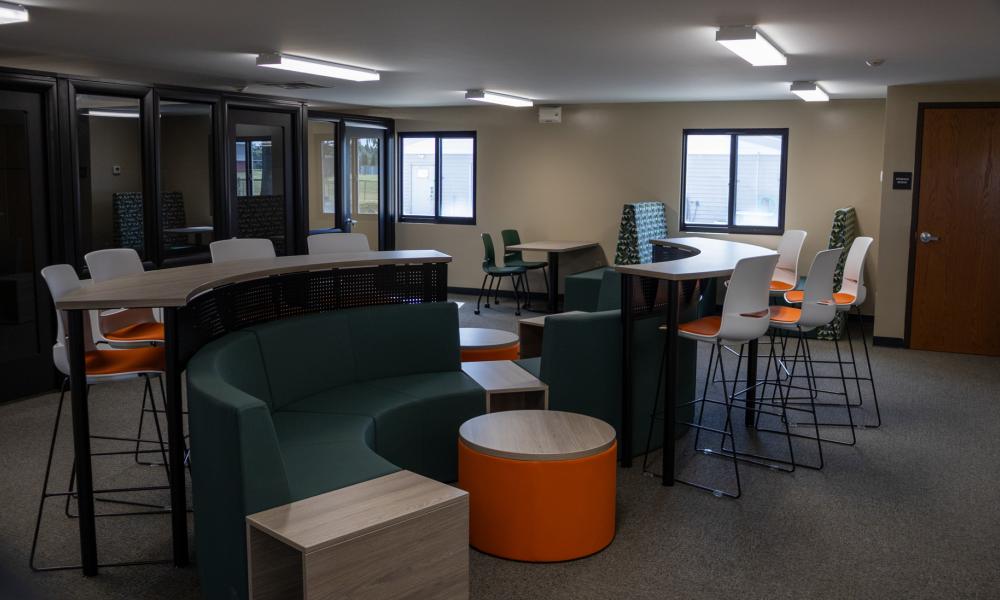
The new space at Lincoln Trail College is designed to bring education, entrepreneurship, workforce development and economic development together, creating a place where students, business owners and community members can work, learn and make connections.
“I envision The 618 being a place that feels active every day; a place where you might see a student working alongside an entrepreneur, a small business owner meeting with a consultant, an employer meeting with a potential employee, or a community member attending a workshop,” Ambrose said.
The public will have an opportunity to see the space during an open house Nov. 12 from 11 a.m. to 1 p.m. The event will include a light lunch.
The 618 will offer flexible workspace, private offices, meeting areas and high-speed internet, along with access to business advising, workshops, mentoring and other resources. Ambrose said the goal is to create something much broader than a traditional coworking space.
“Lincoln Trail College has always been about more than what happens inside our classrooms,” Ambrose said. “We have a responsibility to fulfill the IECC mission to strengthen the community and region we serve. The 618 Project gives us an opportunity to take that responsibility to the next level by creating a co-working space where education, entrepreneurship, workforce development, and rural economic development intersect.”
For Crawford County Development Association Executive Director Resa Shaner, the project addresses a need she has seen among startups, home-based businesses and solo entrepreneurs: access not just to a place to work, but to the people and resources that can help an idea become a sustainable business.
“This space will function as a true community hub for business development,” Shaner said. “The goal is to reduce the barriers that often keep great ideas from turning into viable businesses. Whether someone is launching their first venture or expanding an existing operation, this space will provide the support system they need to move forward.”
That support can include workshops and coaching, small business technical assistance and connections with lenders, advisers and industry partners. The space will also connect entrepreneurs with LTC students and training programs.
For students, The 618 creates another bridge between the classroom and the professional world. Ambrose said students could use the space for CEO classes, FBLA workshops, internships, mentorship programs, networking and projects with local businesses.
The location at LTC is an important part of that equation.
Shaner said having students, instructors and program partners nearby gives entrepreneurs access to potential interns, employees and collaborators. She also sees the campus as a countywide gathering place where education and workforce training can connect directly with entrepreneurship.
Ambrose said the college already occupies a natural position at the intersection of education, workforce development, business development and community engagement.
“Most importantly, LTC is already a place where people come to learn, grow, and prepare for their future,” Ambrose said. “The 618 enhances and expands that role to include people who are creating businesses, growing our economy, and creating jobs.”
The partnership also brings the CCDA’s economic development experience and connections with local businesses together with the college’s students, facilities, technology and workforce development resources. The two organizations have worked together for years, and Shaner’s CCDA office will be located inside The 618.
The IECC Small Business Development Center will also have a regular presence in the space, offering services including business advising, financial guidance, marketing assistance, workshops and networking connections.
The 618 will also serve as a home base for CEO Leadership and Leadership Crawford County, programs CCDA has supported and mentored for several years.
For Shaner, those connections are an important part of the project’s potential to strengthen the county’s business community. Supporting new and growing businesses, she said, can create jobs, generate investment and give residents additional reasons to build their futures in Crawford County.
Ambrose said the same idea applies to lifelong learning. Education does not end when someone receives a certificate or degree. It can continue when someone starts a business, changes careers, learns new technology or develops a new skill.
The 618 gives that kind of learning a physical home.
“Ultimately, I want The 618 to become a place on campus where people come with an idea and leave with a connection, a resource, a new skill, a business plan, or maybe even the beginning of a new business,” Ambrose said.
She hopes the project will also deepen the relationship between the college and the region’s employers, creating more opportunities for businesses to interact with students while giving the college additional ways to hear directly from employers about the skills they need.
Ultimately, Ambrose sees The 618 as an extension of what a community college can offer the people and businesses around it.
“We want people to walk through the doors of The 618 and see possibilities, whether they are a student exploring a career, an entrepreneur developing an idea, an established business looking to grow, or a community member looking for a new opportunity,” Ambrose said. “Our hope is that The 618 becomes a catalyst for people to learn, connect, create and ultimately build a stronger future for our entire region.”
The 618 Project is made possible by a USDA Small Rural Business Development Grant and a $50,000 contribution from the CCDA.